Why Choose Ammonium Nitrate Sulphate for Crops?

Ammonium Nitrate Sulphate can supply crops with nitrogen and sulphur in one granular fertilizer. Its nitrogen is present in ammonium and nitrate forms, while sulphur is generally supplied as sulphate. That combination can be useful where soil tests or crop history indicate a need for both nutrients. But it is not automatically the best choice for every field.

Dr. Achim Dobermann, a soil fertility and crop nutrition specialist, has emphasized matching nutrient management to crop needs and local conditions. A concise paraphrase of that principle is: “Choose nutrients according to crop demand, soil supply, and timing.” This is a paraphrase, not a verbatim quotation. The practical point matters: a grower should check soil results, expected yield, and the field’s sulphur status before choosing a product.

Look closely at the label. Product analysis can vary, and the amount applied should reflect its stated nutrient content. Consider the crop’s growth stage, too. A well-timed application may support healthy leaves and protein formation; an unsuitable rate can waste nutrients or harm crop performance. Weather and soil texture also matter. Heavy rain can move nitrate below the root zone, while dry conditions may limit nutrient uptake.

No fertilizer is a shortcut. Ammonium Nitrate Sulphate is best considered as one option within a measured nutrient plan, not a universal solution. Local agronomic advice can help translate test results into an appropriate rate and application schedule. Practical details deserve attention. So do uncertainties: field conditions change, and recommendations should be reviewed rather than copied blindly.
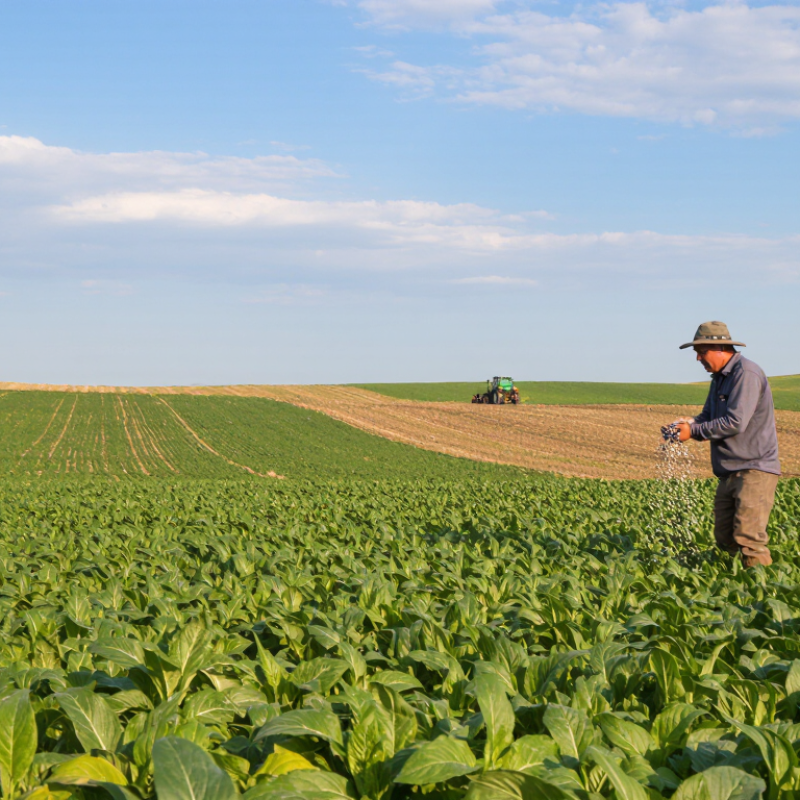
Why Choose Ammonium Nitrate Sulphate for Crops?

Ammonium Nitrate Sulphate: Composition of the Common 26-0-0-13S Grade

The 26-0-0-13S grade supplies 26% total nitrogen and 13% sulfur by weight. The zeros mean it contains no guaranteed phosphate or potash. In a 50-kilogram bag, that equals 13 kilograms of nitrogen and 6.5 kilograms of sulfur. Check the product label for the exact nutrient analysis.

Ammonium nitrate sulphate is commonly made from ammonium nitrate and ammonium sulfate. Its nitrogen may be present in both ammonium and nitrate forms, but their proportions can vary by formulation. Sulfur is commonly supplied as sulfate, which crops can take up through their roots. That balance matters. Nitrogen supports leafy growth and protein formation, while sulfur contributes to amino acids and enzyme activity.

This grade can suit crops with meaningful nitrogen and sulfur needs, especially where soil tests show low sulfur. It does not replace phosphorus or potassium when those nutrients are required. A pale patch between leaf veins can suggest a nutrient issue, but it is not a diagnosis; several stresses look similar. Use soil or plant tests, consider crop stage, and follow the local application guidance. More fertilizer is not automatically better, and timing can still be imperfect.

Why Choose Ammonium Nitrate Sulphate for Crops?

Composition of the common 26-0-0-13S grade

The 26-0-0-13S grade contains 26% nitrogen and 13% sulfur by weight. The zeros indicate no declared phosphate (P₂O₅) or potash (K₂O) in this grade. Check the product label for its guaranteed analysis.

Nitrate and Ammonium Nitrogen: Two Forms in a 26% N Fertilizer

Ammonium nitrate sulphate typically supplies 26% nitrogen, often split into 13% nitrate-N and 13% ammonium-N. Check the guaranteed analysis on the local product label, since grades can vary. The two forms behave differently in soil. Nitrate dissolves readily in soil water and can reach roots quickly. It can also move below the root zone after heavy rain. Ammonium carries a positive charge, so soil particles can retain some of it; microbes gradually convert it to nitrate. FAO’s Plant Nutrition for Food Security bulletin identifies nitrate and ammonium as the main mineral nitrogen forms taken up by crops (FAO, 2006).

A useful split, not a magic one.

For a crop with active roots, nitrate can support prompt uptake, while ammonium provides another pool as soil conditions allow conversion. The balance still depends on rainfall, soil texture, temperature, and application timing. A wet, sandy field may lose nitrate faster than a cool, fine-textured one. That detail matters. Fertilizers Europe’s technical guidance on nitrate fertilizers describes the paired nitrate and ammonium forms; the 26% grade analysis translates that balance into about 13% of each form. Use soil tests and crop demand to set rates, rather than treating the nitrogen percentage as a complete plan. Even good fertilizer can be misplaced or applied too early. That is easy to overlook.

Sulphur’s Role in Crop Nutrition and the Value of a 13% S Grade

Why Choose Ammonium Nitrate Sulphate for Crops?

Sulphur helps crops build the amino acids cysteine and methionine, which support protein formation. It also works alongside nitrogen in crop growth. When sulphur is short, leaves may turn pale, and plants can use applied nitrogen less efficiently. The symptoms can resemble nitrogen deficiency, so a soil or tissue test is useful.

Manitoba Agriculture’s canola fertility guidance gives a practical benchmark of about 20–30 pounds of sulphur per acre where a response is expected. Actual need varies with soil sulphate, rainfall, and yield target.

A 13% S grade delivers 13 kilograms of sulphur per 100 kilograms of product. Many ammonium nitrate sulphate formulations also contain 26% nitrogen, but check the guaranteed analysis on the bag. That combination can simplify nutrient application.

It is not a cure-all. Sulphur must be available in a form roots can take up, and placement and timing still matter. Wet spring soils can leach sulphate, while dry soil may slow nutrient movement.

Tips: Compare the fertilizer analysis with your soil-test recommendation. For canola, confirm the local sulphur rate before spreading; field history alone can mislead. Keep a small untreated strip. The difference is often instructive.

Choosing Crops and Application Rates Through Soil Testing and Yield Targets

Ammonium nitrate sulphate supplies nitrogen and sulphur, nutrients that support crop growth and protein formation. It may suit cereals, oilseed crops, and other crops where soil tests or crop history indicate a need for both nutrients. But crop choice alone is not enough. A soil test gives a clearer starting point. Take representative samples across similar soil areas, rather than relying on one sample from a headland or unusually wet patch. Check the laboratory’s results alongside previous yields, crop residues, and manure applications. Small details matter.

Set application rates against a realistic yield target, not an optimistic guess. Estimate the crop’s nitrogen requirement, then account for nitrogen already available from soil, manure, and previous crops. Use the product’s nutrient analysis to calculate how much fertiliser supplies the remaining need; follow local agronomic guidance where available. Sulphur rates should also reflect the test result and crop demand. Oilseed crops may need careful sulphur planning, while legumes often require a different nitrogen strategy. Timing matters. Splitting nitrogen applications can help match supply to uptake, especially where heavy rain could move nutrients below the root zone. Field records are rarely perfect, and that is worth admitting: compare treated areas, rainfall, and harvested yield each season, then adjust the next plan.

Why Choose Ammonium Nitrate Sulphate for Crops? - Choosing Crops and Application Rates Through Soil Testing and Yield Targets

The examples below illustrate how a nitrogen target can be converted into a product rate. They use an assumed ammonium nitrate sulphate grade of 26% nitrogen (N) and 13% sulphur (S); actual nutrient analysis varies by product, so check the label. Rates are illustrative planning figures, not field-specific recommendations.

Crop and example yield target Example fertilizer N target
(kg N/ha)
Illustrative product rate
(kg/ha)
S supplied at that rate
(kg S/ha)
Soil-test and management considerations
Winter wheat
6 t/ha grain
120 462 60 Use a locally calibrated N recommendation that accounts for soil mineral N, previous crop, organic matter, and expected yield. Check soil S where deficiency is a risk.
Grain maize
10 t/ha grain
180 692 90 Base N planning on a regional recommendation and available soil N; account for manure and legume credits. Split applications may help match N supply to crop uptake and reduce loss risk.
Canola (oilseed rape)
3 t/ha seed
150 577 75 Canola has a meaningful S requirement. Test soil or follow local crop guidance, and count S from all fertilizer and organic sources before selecting a rate.
Spring barley
5 t/ha grain
100 385 50 Adjust N to the intended end use and local quality requirements. Soil mineral N, previous crop, and expected yield can change the appropriate rate substantially.
Calculation and use: Product rate (kg/ha) = target fertilizer N (kg/ha) ÷ 0.26. At the assumed 26% N and 13% S analysis, each kilogram of N applied through this product supplies 0.5 kg S. Subtract nutrient contributions from soil, manure, crop residues, and other fertilizers before calculating the final rate. Base decisions on representative soil tests, locally calibrated recommendations, the product label, and advice from a qualified local agronomist. Avoid placing concentrated fertilizer in direct contact with seed, and follow local environmental and application rules.

Storage, Handling, and Local Rules for Nitrogen-Sulphur Fertilizers

Ammonium Nitrate Sulphate for Crops: Storage, Handling, and Local Rules

Ammonium nitrate sulphate supplies nitrogen and sulphur, but careful storage matters as much as field application. Keep bags sealed, labelled, and dry in a cool, well-ventilated storage area. Protect them from rain and damp floors; moisture can cause caking and make spreading uneven. Use clean equipment, and avoid contact with fuels, oils, organic materials, or other incompatible substances. Follow the product label and safety data sheet, since formulations and precautions can differ.

Check local requirements before buying or storing larger quantities. Rules may cover secure access, permitted storage amounts, fire precautions, or transport. Ask the relevant agricultural or safety authority when requirements are unclear. Keep an inventory and inspect bags regularly for damage or moisture. If material has clumped, do not break it up with improvised tools; check the supplier’s handling guidance first. Small details matter.

Tips: Wear suitable gloves and eye protection when handling dusty material. Wash hands afterward. Keep bags away from drains and watercourses, and store them where children and animals cannot reach them. Do not guess at local rules. Verify them.
You've just added this product to the cart:

0
    0
    Your Cart
    Your cart is empty