Choosing the right Cardboard Edging is a practical decision, not a simple material purchase. The correct profile protects exposed corners, improves stacking stability, and gives finished goods a cleaner presentation. Yet many buyers focus only on price. That can become expensive when crushed edges, shifting loads, or damaged surfaces appear during handling.
Packaging researcher Susan E. M. Selke offers a useful principle: “A package must protect its contents while avoiding unnecessary material.” Her point applies directly to Cardboard Edging. Thickness, density, width, and compression strength must match the product and shipping environment. A narrow edge protector may suit lightweight cartons. Heavier furniture, appliances, or palletized construction materials need stronger reinforcement. Moisture also matters. A warehouse with condensation demands better surface protection than a dry indoor storage room.
Measure the load first.
Consider the corners, straps, stacking height, and transport distance. Recycled fiber content may support sustainability goals, but it should not weaken performance. Ask suppliers for compression data, dimensional tolerances, and samples under real conditions. A small trial can reveal slipping, bending, or poor fit before full production begins.
There is no universal best option. That is the part many guides simplify too much. In practice, the ideal Cardboard Edging may involve a compromise between strength, cost, appearance, and recyclability. Record what failed during testing. The imperfect result often teaches more than a polished specification. This guide explains how to compare these factors and select edging that protects products reliably from packing line to final delivery.
How to Choose the Right Cardboard Edging?
Choosing cardboard edging starts with a clear question: What must it protect? A pallet of ceramic tiles needs stronger corner support than a carton of clothing. Identify the load weight, stacking height, transport distance, and handling conditions. Note exposed edges and pressure points. Protection comes first. If boxes move by forklift, choose edging that resists compression and prevents straps from cutting into cartons. For indoor storage, lighter material may be enough. This distinction prevents over-specification and unnecessary waste.
Measure before ordering. Record product dimensions, pallet width, strap position, and moisture exposure. A rigid edge profile can stabilize stacked cartons, while wider wings distribute tension across fragile packaging. Test a small batch under realistic conditions. Apply normal strap tension, stack the intended layers, and inspect corners after movement. Look for crushing, slippage, bowed panels, or loose fibers. A visual check alone can mislead. Neat-looking loads can still fail after one rough turn.
Ask suppliers for thickness, recycled content, compression performance, and moisture guidance. Request samples, not promises. Protection requirements may change during rainy seasons or longer routes. Cardboard edging is not waterproof, and ignoring this creates risk. Compare damaged-goods records before and after use. The data may expose a weak assumption, such as choosing thickness by appearance instead of load behavior. Small errors matter when every pallet carries expensive products.
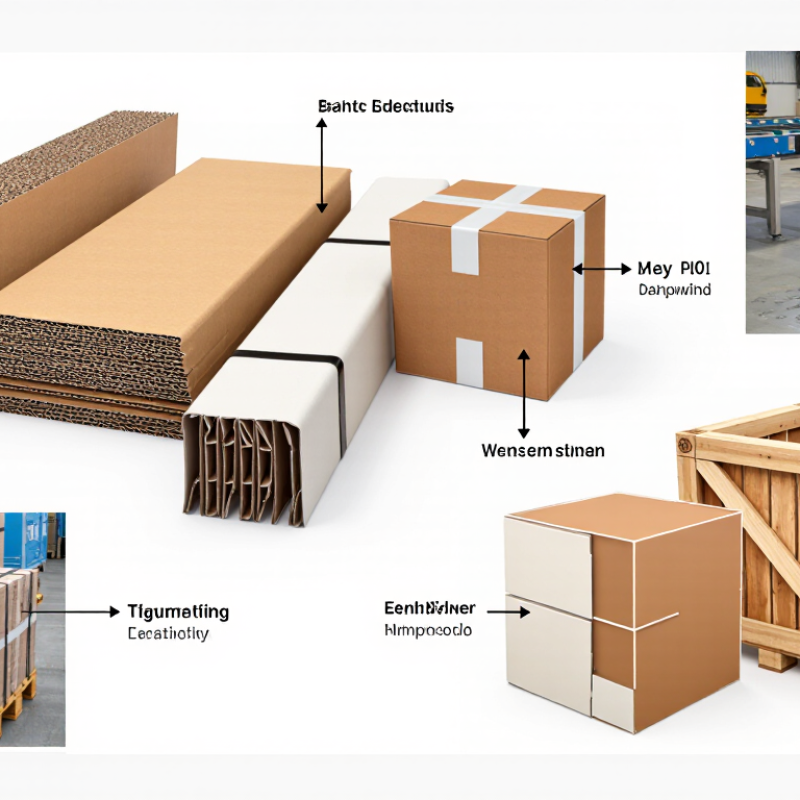
Cardboard edging differs in shape, fiber quality, and protective performance. L-shaped angle board suits pallet corners and flat panels. U-shaped edging protects narrow edges, such as doors or glass sheets. Reinforced corner boards resist compression better during stacking.
Recycled-fiber edging is usually economical and widely available. Virgin-fiber edging can offer cleaner surfaces and more consistent strength. However, material choice should match the load, not appearance. The American Forest & Paper Association reported a 68% U.S. paper recycling rate in 2023, supporting fiber-based packaging choices. Yet, wet or heavily coated edging may reduce recyclability.
Test the edging with the actual product, pallet pattern, and wrapping method. Edge protection fails when board width is too short. It also fails when straps cut into weak corners. Compare thickness, leg length, moisture resistance, and compression strength.
For heavy appliances, select dense multi-ply angle board. For lighter cartons, standard recycled edging may perform sufficiently. Packaging testing should follow recognized procedures, including compression and vibration evaluations referenced by ASTM and ISO packaging standards. A lower-cost option is not always cheaper after damaged goods, repacking, and returns.
Tips: Measure the corner first. Keep the edging flush with the load. Ask for compression test results, not general claims. Check whether coatings affect recycling. Run a small shipping trial. One test can expose a poor assumption. No option is perfect; humidity, stacking height, and handling habits still require review.
Choosing cardboard edging starts with accurate measurement. Measure the product corners, pallet height, and strap position. The edging should cover the exposed edge without blocking labels or fittings. A narrow profile may leave pressure marks. An oversized profile can shift during transport. Fit matters.
Thickness depends on the load and handling conditions. Light cartons often need a thinner protector, while stacked furniture or machinery requires a heavier profile. Do not assume thicker always means stronger. Check the manufacturer’s compression data, edge crush rating, and moisture resistance. These figures provide better guidance than appearance alone. I once selected edging by thickness only, and the corners still collapsed under tight strapping.
Strength must match the real shipping environment. Consider pallet weight, stacking height, forklift movement, vibration, and strap tension. Place protectors along every strapped edge, not only the visible corners. Test a sample shipment with the actual straps and wrapping materials. Watch for bending, crushing, and slipping after handling. Test under pressure.
Humidity also changes performance. Store the edging on a dry, level surface before use. If the shipment may enter a damp warehouse, choose treated material or add suitable external protection. Record the test results, even when they look disappointing. Small failures often reveal an incorrect size or uneven load. A practical review after each shipment can improve the next selection.
Select the appropriate size, thickness, and strength according to the product’s edge length, stacking pressure, and handling conditions.
The chart shows commonly used cardboard edge-protector leg widths and corresponding practical thickness ranges. Larger leg widths and thicker board generally provide better load distribution and corner protection. Final selection should be verified against package weight, stacking height, transport vibration, and the supplier’s compression test results.
How to Choose the Right Cardboard Edging?
Evaluate Sustainability, Customization, and Cost
Sustainability starts with the material, not the green appearance. Ask about recycled fiber content, fiber sources, and supporting documentation. Recyclable edging is useful only when local facilities accept it. A thin coating or mixed material may complicate recycling. Check production waste, ink types, and shipping distance as well. Small details matter. A supplier should explain these choices clearly.
Customization should protect the product without creating unnecessary waste. Measure the item’s corners, surface pressure, and stacking conditions before requesting a sample. Edge thickness, length, color, printing, and perforations can all affect performance. Test the edging on real cartons, not only on a clean prototype. Rough handling often exposes weak folds. One lesson from trial runs is simple: attractive printing cannot fix poor fit. I would also question whether every custom feature serves a practical purpose.
Cost requires more than comparing the unit price. Include tooling, setup fees, minimum order quantities, storage, freight, and labor. A cheaper edge protector may increase carton damage or packing time. Request a written quotation with material specifications and tolerances. Then compare samples under compression, moisture, and handling conditions. This process takes longer. It can prevent expensive changes later. Even careful estimates may miss seasonal freight increases or warehouse space costs, so leave a modest contingency.
| Edging Material | Typical Recycled Content | Recyclability | Moisture Resistance | Load Protection | Customization Options | Typical Unit Cost* | Best-Suited Applications |
|---|---|---|---|---|---|---|---|
| Recycled Kraft Paper Angle Board | 80–100% | ★★★★★ Widely recyclable when clean and dry | ★★☆☆☆ Limited without a coating | ★★★★☆ Strong compression and corner support | Multiple leg lengths, thicknesses, lengths, colors, printing, and custom die-cut profiles | US$0.08–0.35 | Palletized goods, furniture, appliances, glass, metal, and warehouse shipments |
| Virgin-Fiber Kraft Paper Angle Board | 0–30% | ★★★★★ Widely recyclable when clean and dry | ★★☆☆☆ Requires treatment for wet conditions | ★★★★★ Consistent strength and edge rigidity | Precise dimensions, branded printing, color matching, and structural profiles | US$0.12–0.45 | Heavy, high-value, or compression-sensitive products requiring consistent performance |
| Corrugated Cardboard Edge Protector | 50–90% | ★★★★★ Usually recyclable with paper packaging | ★★☆☆☆ Performance decreases when saturated | ★★★☆☆ Suitable for light to medium loads | Flute type, board grade, dimensions, printing, scoring, and perforation | US$0.06–0.28 | Retail cartons, parcel shipping, framed products, and lightweight pallet loads |
| Solid Recycled Paperboard Edge Strip | 70–100% | ★★★★★ Recyclable in standard paper streams when uncontaminated | ★★☆☆☆ Not intended for prolonged exposure to water | ★★★☆☆ Good for surface and corner protection | Cut length, thickness, folding, adhesive backing, and simple printing | US$0.05–0.22 | Cabinet panels, doors, picture frames, flat-pack goods, and carton reinforcement |
| Coated Paperboard Edge Protector | 50–90% | ★★★☆☆ Recyclability may be reduced by polymer or wax coatings | ★★★★☆ Better resistance to humidity and brief splashes | ★★★★☆ Suitable for demanding handling conditions | Protective coating, color, printed graphics, dimensions, and custom shapes | US$0.12–0.50 | Cold-chain logistics, humid warehouses, export shipping, and moisture-sensitive packaging |
| Molded Pulp Corner Protector | 60–100% | ★★★★☆ Generally recyclable or compostable depending on additives | ★★☆☆☆ Can soften under prolonged moisture exposure | ★★★☆☆ Effective for shaped products and impact cushioning | Custom molds, contours, wall thickness, surface texture, and printed markings | US$0.15–0.70 | Electronics, ceramics, furniture corners, and products requiring fitted cushioning |
*Typical unit-cost ranges are indicative estimates in U.S. dollars for standard production quantities. Actual pricing varies with dimensions, board grade, order volume, tooling, printing, coatings, freight, and regional material costs. Recyclability depends on local collection systems and whether the product contains coatings, adhesives, or other materials.
Supplier quality should be checked before comparing prices. Ask for board grade, flute profile, thickness, moisture resistance, and compression results. A reliable supplier should provide batch records and samples from current production. The sample must match the quoted specification. Small differences matter.
Smithers’ report, The Future of Corrugated Packaging to 2028, valued the global corrugated packaging market at approximately US$205.8 billion in 2022. It forecasts about US$246.0 billion by 2028. This growth increases sourcing options, but quality can vary between converters. FEFCO’s 2023 industry statistics also recorded about 48.1 billion square metres of European corrugated board production. Large volumes do not guarantee suitable edging.
Confirm compatibility with the actual carton and pallet load. Measure the board height, corner radius, strap position, and stacking pressure. A rigid edge protector may crush lightweight cartons during tightening. A softer grade may bend under vertical loads. Check moisture exposure in chilled rooms or humid warehouses. Test the complete pack, not the edging alone. Use compression and vibration testing when possible, following recognized transport-test procedures. I still recheck fit after handling trials. It feels repetitive, but assumptions fail easily. One overlooked millimetre can leave a strap cutting into the carton. Supplier certificates help, but physical inspection remains necessary. No specification is perfect.

