7 Best Camping Grills for Outdoor Cooking

A good Camping Grill should make outdoor cooking easier, not turn dinner into another project. The right choice depends on where you camp, how many people you feed, and what you like to cook. A compact tabletop model may suit a two-person tent trip. A larger grill can handle burgers, vegetables, and breakfast for a family. Weight matters. So does setup time. A grill that stays in the car because it is awkward to clean is not much of a bargain.

Grilling educator and author Steven Raichlen has spent years explaining live-fire cooking. A practical paraphrase of his approach is: “Choose heat control over flashy features.” That is a useful test when comparing seven popular options. Look for steady burners, a grate that cleans without a struggle, and controls you can adjust with a gloved hand. Wind can challenge small flames, while uneven heat may leave one side of dinner pale and the other charred. Annoying, but real.

This guide considers portability, cooking space, fuel type, cleanup, and overall value. It also recognizes a limit: no single grill suits every campsite or cook. Product specifications help, but they cannot fully show how a lid feels or how easily grease collects around a burner. The picks ahead are meant to narrow the search, not promise perfection. Pack the grill that fits your routine. Then make room for the good food.
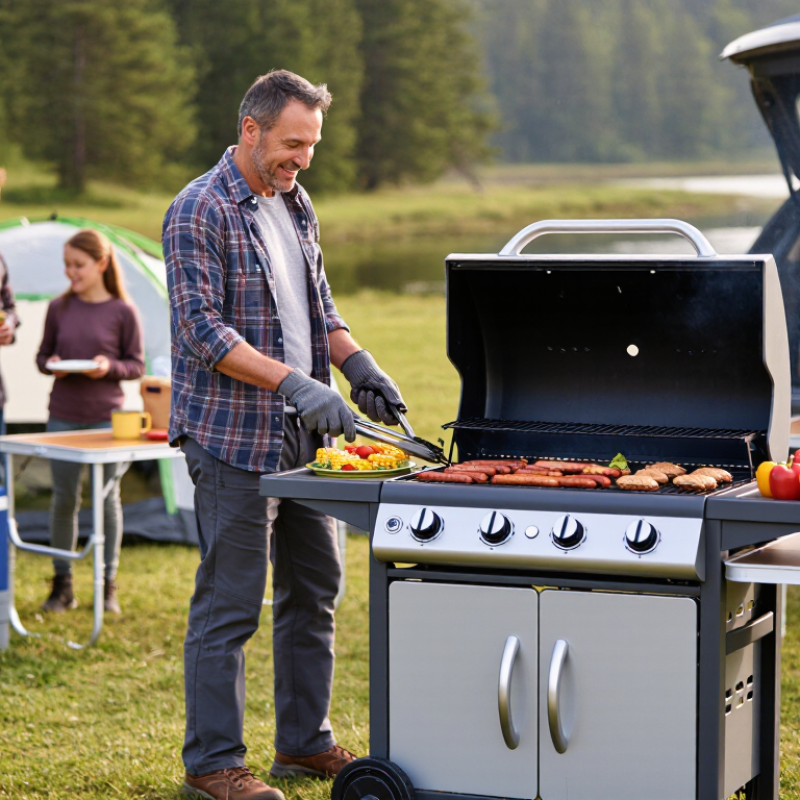
7 Best Camping Grills for Outdoor Cooking

Camping Grills: Purpose, Fuel Types, and Outdoor Use

A camping grill gives you a steady place to cook when a campfire is impractical or too unpredictable. Its purpose is simple: provide controllable heat for meals, from warming tortillas to searing vegetables. Choose a size that suits your group and transport space. A large cooking surface sounds useful, but it can become awkward to carry and clean.

Fuel affects flavor, setup, and heat control. Propane grills usually light quickly and allow easy temperature adjustments. Charcoal models can add a smoky taste, but they need time to heat and cool. Some compact grills use wood, which may be convenient where dry fuel is available. Wind can still disrupt cooking, even with a good grill. I would not assume a sheltered picnic table is automatically a safe cooking spot; check the ground, airflow, and campsite guidance before lighting anything.

Tips: Test the grill at home before your trip. Pack fuel separately, bring long-handled tongs, and keep a small brush for the grate. Set the grill on a stable, level surface, away from tents and dry leaves. Let it cool fully before packing. Cleanup takes longer than expected.

Key Features for Evaluating Camping Grills

A camping grill should earn its space before it earns a place in your vehicle. Compare its packed weight, folded dimensions, and setup time, then check whether its legs stay steady on uneven ground. A narrow cooking grate may suit two people, but it can feel cramped when several meals need cooking. Small details count. Look for controls that are easy to reach and a lid that opens without shifting.

Heat control matters more than a large burner number on a product sheet. Test whether the grill can hold a low flame for vegetables and deliver even heat for thicker cuts. A built-in thermometer helps, but it cannot replace a food thermometer. USDA guidance calls for 165°F for poultry, 160°F for ground meat, and 145°F for whole cuts of beef, pork, and lamb, followed by a three-minute rest. Those numbers make temperature checks practical, not fussy.

Cleaning and safe placement deserve equal attention. Removable grease trays and smooth, accessible surfaces can save time after a smoky meal. NFPA reports an average of 10,600 home fires involving grills, hibachis, or barbecues annually during 2017–2021. That matters outdoors. Choose a stable setup, keep the grill away from tents and dry materials, and follow its clearance instructions. One compromise remains: lighter grills are easier to carry, but may feel less stable in wind. Check the design carefully.

Seven Notable Camping Grills for Outdoor Cooking

Seven notable camping grills serve different outdoor cooking needs. A compact charcoal kettle gives food smoky flavor, though it needs time to heat and cool. A folding campfire grate sits over established coals and handles sturdy pans well. A tabletop propane grill lights quickly and suits simple meals. Small, but useful. A two-burner portable grill offers separate heat zones for vegetables and protein, yet takes more room in the vehicle.

A pellet grill can provide steady, indirect heat, but it needs power and careful fuel planning. A portable flat-top griddle is handy for eggs, pancakes, and chopped vegetables; its broad surface also needs regular scraping. A compact hibachi-style grill heats fast and works well for skewers or small cuts, although its cooking area is limited. That makes meal timing matter.

Before choosing, check weight, packed dimensions, fuel needs, and cleaning requirements. Wind can make a small flame uneven, so a stable setup and adjustable heat are valuable. Keep cooking equipment on a level, nonflammable surface, and follow the site’s fire rules. One easy mistake is packing for the meal but not the cleanup. Grease, ash, and damp grates can turn a convenient grill into an annoying load.

Comparing Portability, Cooking Space, Heat Control, and Price

7 Best Camping Grills for Outdoor Cooking

Comparing seven camping grills means balancing packed size, cooking space, heat control, and price. A small tabletop grill slips beside a cooler, but its short grate may leave little room for dinner. Folding legs make setup easier; however, bulky hinges can still crowd a car trunk. Larger models suit group meals, though they cost more and need a steadier surface. There is no perfect trade-off.

Look for separate heat zones or a responsive control knob if you cook foods with different timing. A single burner can be cheaper, but hot spots may char one side of a pan. The National Fire Protection Association reported an average of 10,600 home fires involving grills each year from 2014 to 2018. That figure is not camping-specific, but it supports choosing stable equipment and keeping it clear of tents and dry brush. For doneness, USDA guidance recommends 165°F for poultry and 160°F for ground meat; a pocket thermometer beats guessing.

Tips: Compare packed dimensions, not just grill weight. Check grate space against your usual group size, and budget for fuel. Test the controls before leaving home. A little awkward? Better to discover that at home.

7 Best Camping Grill Types: Cooking Area vs. Typical Price

A comparison of seven common portable grill styles. Cooking areas and prices are representative estimates; actual specifications and retail prices vary by model and market.

Larger cooking surfaces can serve more people, while compact charcoal designs are often less expensive. Consider packed size, fuel availability, and heat adjustment features alongside cooking area and price.

How to Choose and Use a Camping Grill Safely

Choose a camping grill that matches your group size, fuel access, and cooking plans. A small, stable model is easier to position on uneven ground, while a lid helps manage flare-ups and wind. Check that the grill’s legs lock securely and that its parts can be cleaned without special tools. For propane models, inspect the hose and connections before each trip; for charcoal models, bring a metal container for fully cooled ash. These details can feel fussy when camp is waiting. They matter.

Set the grill outdoors on level, noncombustible ground, well away from tents, dry grass, and low branches. Never cook inside a tent, vehicle, or enclosed shelter.

The U.S. Fire Administration warns that charcoal-burning equipment can produce deadly carbon monoxide, even when a space seems ventilated. Wind changes everything. Recheck the grill if gusts shift sparks or smoke toward nearby gear.

Keep children and pets outside the cooking area, and stay close while food is cooking. The National Fire Protection Association estimated an average of 10,600 home fires involving grills each year from 2014 to 2018. That figure is a useful reminder, though a campsite is not a home.

Let the grill cool completely before moving it or packing it away.

You've just added this product to the cart:

0
    0
    Your Cart
    Your cart is empty